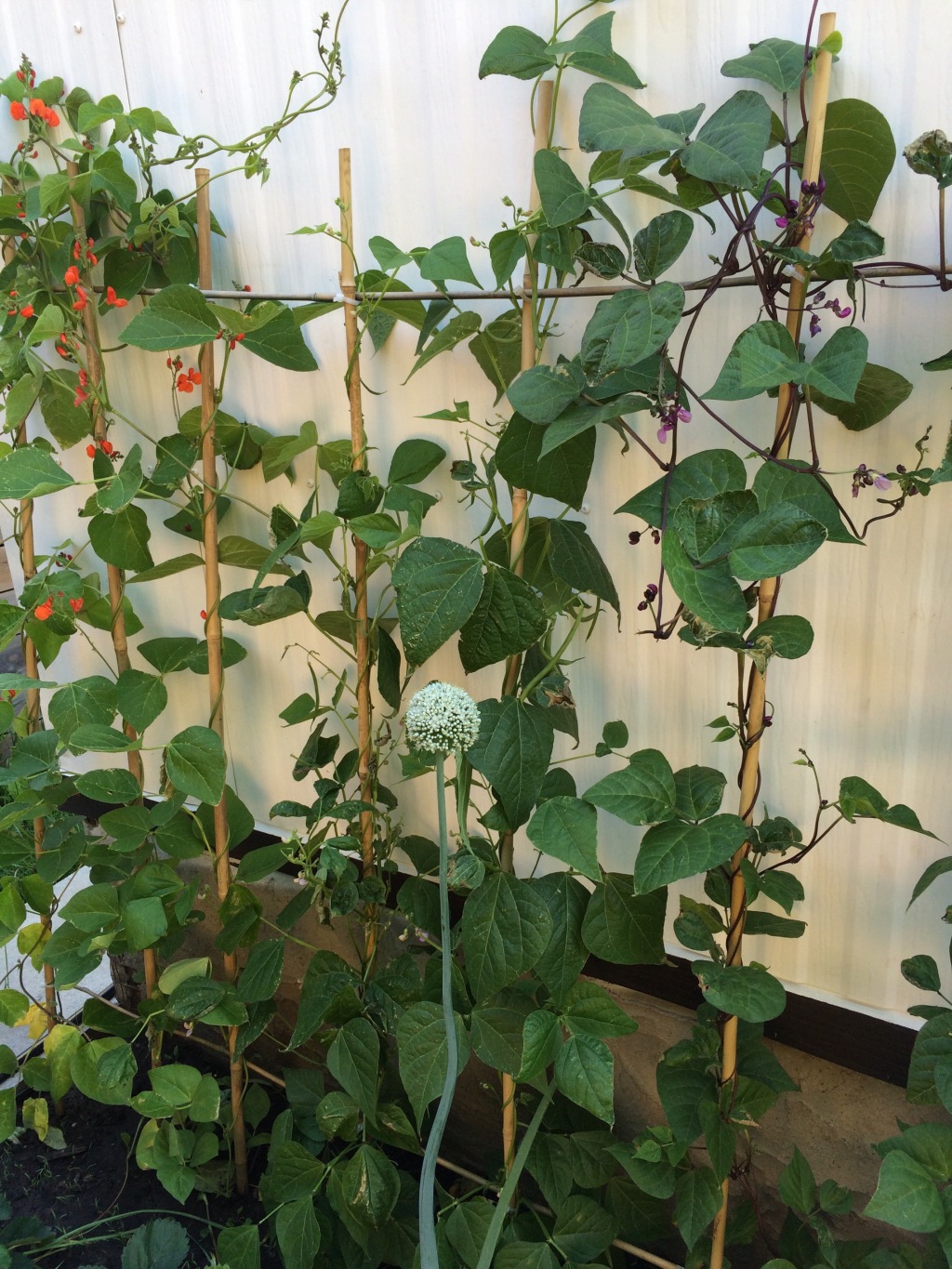
I figured I would keep writing about the other seeds I have sown this year, so this time, its Beans.
I did 4 types of climbing/Pole/Runner Beans, and 2 types (so far anyway) of Bush Beans.
If you read my last post about zucchini and squash. I was pretty long winded about my squirrel and slug battle plan, so rather than rehash it out in this post too, I’m just going to link back to the zucchini post. But the TLDR for squirrel protection for the seeds is flipped over plant trays to give the seeds a chance to germinate without the squirrels thinking they won the lottery.

- ‘Asparagus’ Yard Long Beans
- Days to Maturity: 95 Days (from indoor starts)
- West Coast Seeds: “Asparagus Bean seeds are also known as yard long beans. This attractive plant is botanically different from regular pole beans and bears the tongue-twisting Latin name Vigna unguiculata sesquipidalis. At first this plant appears to grow as a bush, but when summer heat comes along, it bursts into vertical growth with twisting vines, and purple flowers, followed by fast-growing pods that are meant to be harvested at 60-65cm (24-26”) in length. Even at that amazing size, the beans are just over 1cm (½”) thick, tender, and tasty. These beans feature prominently in Asian cuisines, and are most productive in hot weather.”
- These might not do great here, depending on what kind of summer we have, just due to the days to maturity, and that I only planted directly outside. But It was worth a shot to me. I only planted 4 of the bamboo stakes with these in the hottest area of that bed, so here’s hoping we get some super long beans from them.
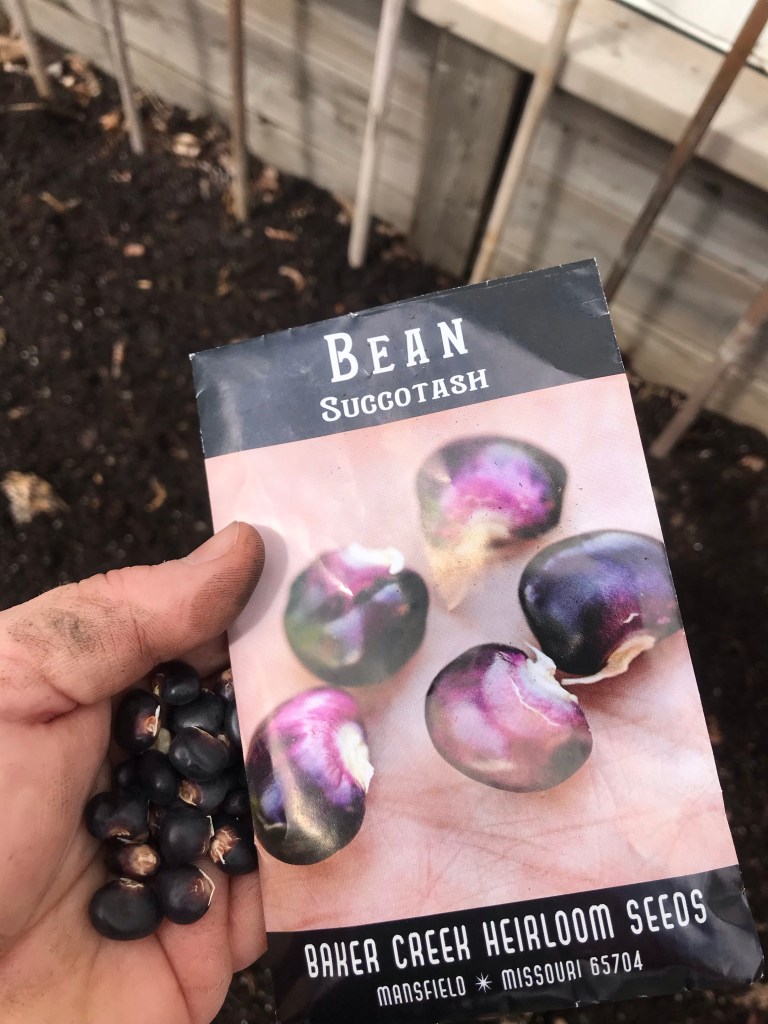
- ‘Succotash’ Beans
- Days to Maturity: Not listed
- Baker Creek: “A rare, ancient bean from the Narragansett Indian tribe of Rhode Island. This uniquely shaped, dime-sized bean closely resembles a kernel of corn. This variety was used for succotash–the iconic indigenous northeastern dish of corn and beans that historians believe was served at the first Thanksgiving. This bean is ideal for the north, particularly on the coast.”
- In the winter of 2020 I was super excited to grow these, and then last spring I was a million times too busy with work and trying to sleep and deal with background life stuff that the farthest thing from my mind was planting beans. So this year I HAD to put these in the ground.
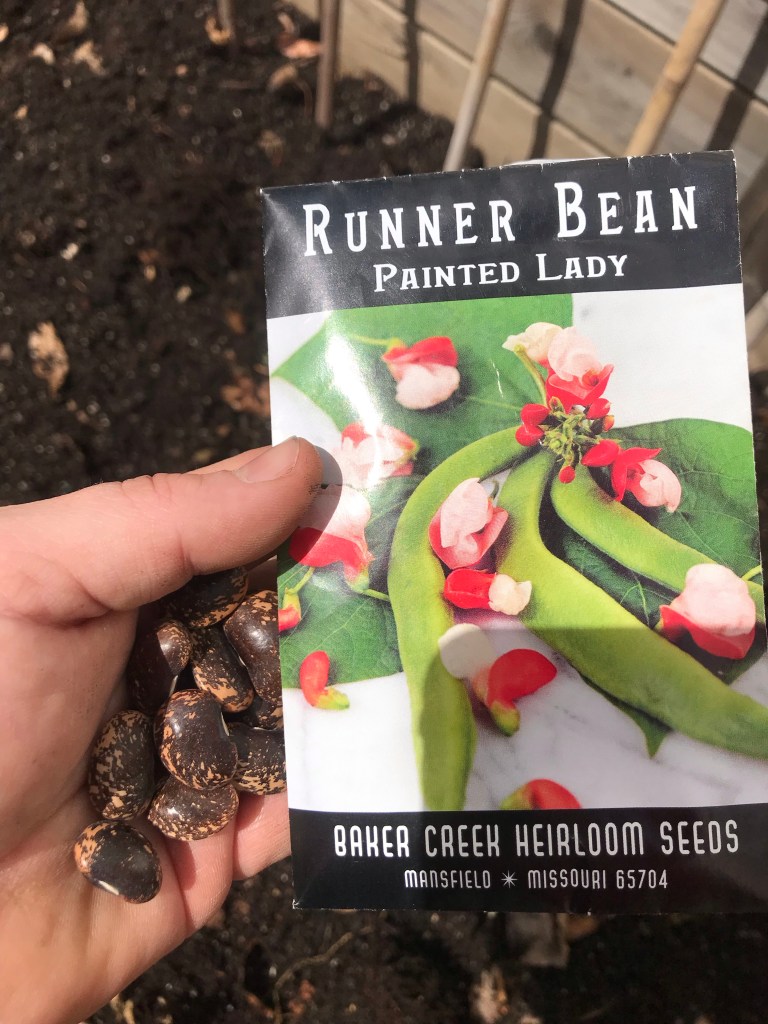
- ‘Painted Lady’ Runner Beans
- Days to Maturity: Not Listed
- Baker Creek (This is not listed on their website anymore):
- I did grow these in 2020, but battled the squirrels, and my energy levels after working all day at a busy garden centre, so the harvest was little to none.
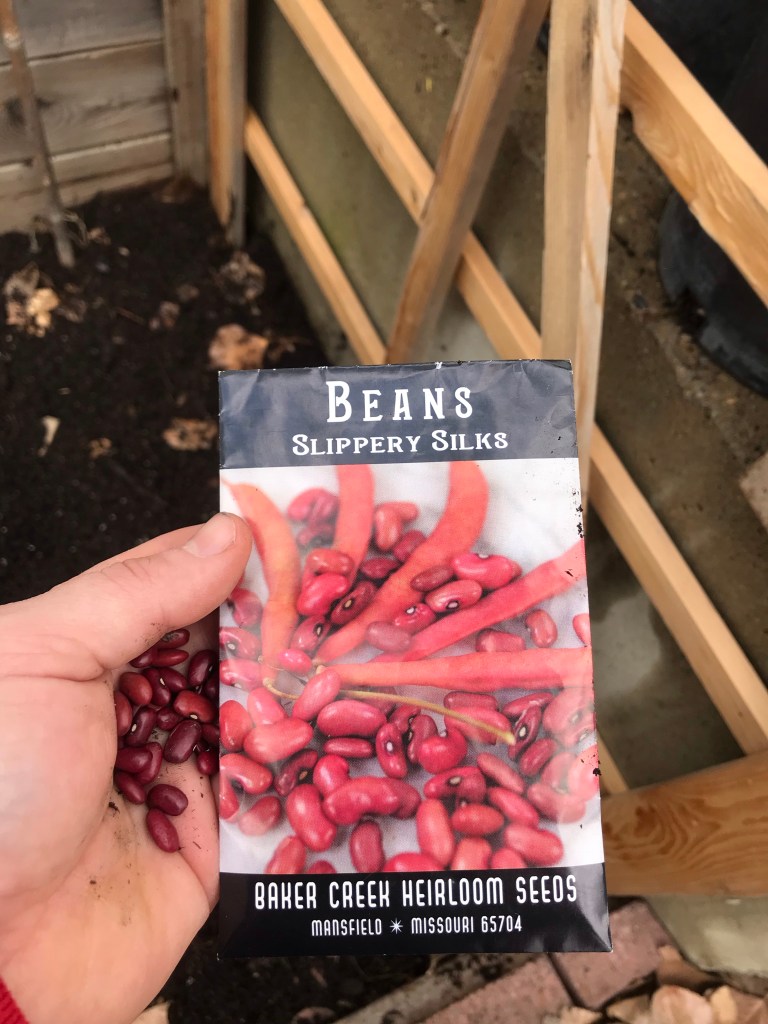
- ‘Slippery Silks’ Pole Beans
- Days to Maturity: Not Listed
- Baker Creek: “We love this splendid Honduran heirloom dry bean for its silky soft, creamy texture and top-notch flavor. Famous for its quick cooking time and ability to be reheated without losing its superior texture, this variety is traditionally cooked over a wood fire, but is also happy on the stovetop!”
- Just like the Succotash beans above, in the winter of 2020 I was super excited to grow these, and then last spring I was a million times too busy with work and trying to sleep and deal with background life stuff that the farthest thing from my mind was planting beans. So this year I HAD to put these in the ground.
Bush Beans:
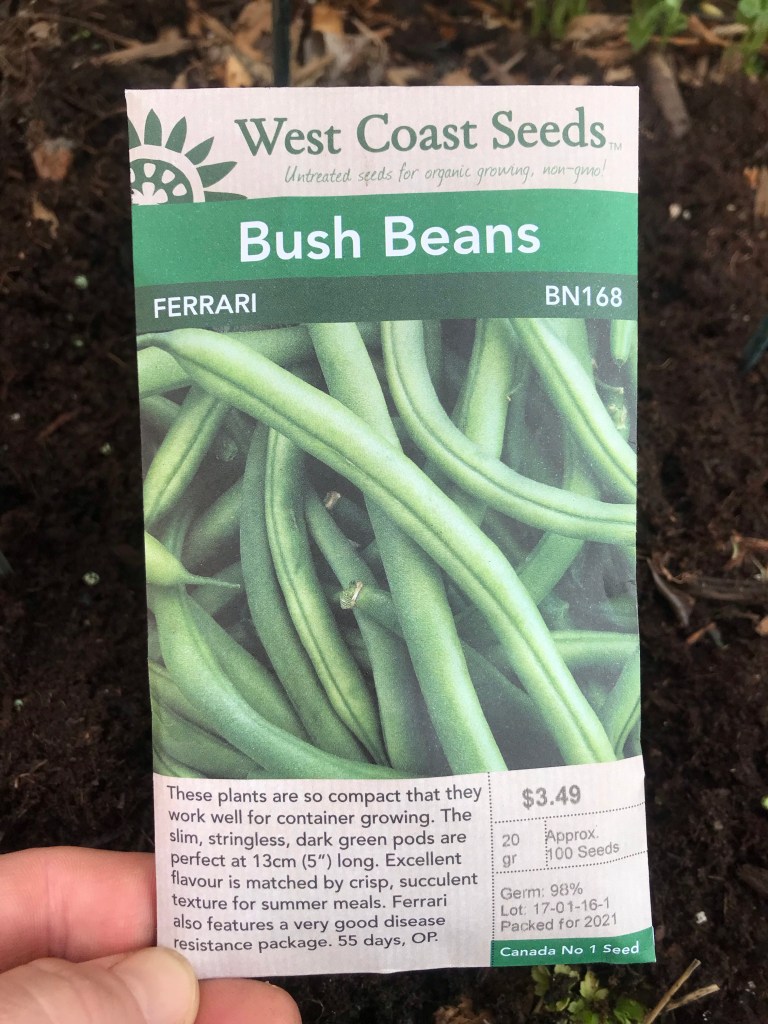
- ‘Ferrari’ Bush Beans
- Days to Maturity: 55 days
- West Coast Seeds: “Ferrari is considered a French filet type bean and has a wonderful flavour. The slim, stringless, round pods develop early on compact plants, and grow to 13cm (5”). This variety has good potential for early starting under cloche protection, and is compact enough for container growing. Ferrari bush bean seeds are resistant to Anthracnose and BCMV, and tolerant to Cucumber Mosaic Virus.”
- Classic Green Beans are always something I want to grow. I love green beans almost as much as zucchini.
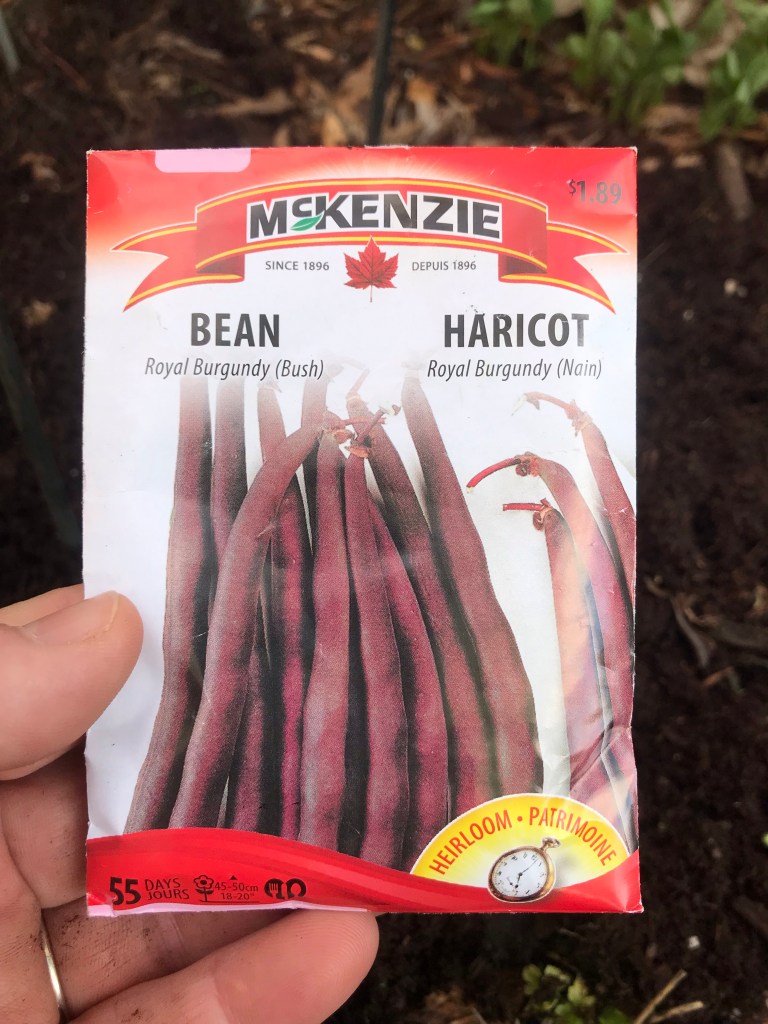
- ‘Royal Burgundy’ Bush Beans
- Days to Maturity: 55 Days
- McKenzie Seeds: “This unusual dark purple podded bean produces an abundant yield of tender and delicious stringless beans. Pods turn dark green when cooked. Excellent fresh or frozen. Best flavour when picked about 10cm (4″) long. Make successive plantings every 2 weeks for a continuous supply. Plant directly in the garden after lost frost.”
- These have been one of my favourite beans to grow over the years. They have always done well, whether I neglect them or not.
Just before I make this post live, I also popped in some Yellow Wax Bush Beans into a pot, and some Tendergreen Bush Beans where I had terrible luck with my Siberian Garlic. I don’t want to go into the details of those varieties because otherwise this post will never go live.



 The Crafty Cultivator
Leave a comment